Switzerland's Cantonal League Structures and Talent Pipelines Linking Football Prospects to Cycling and Athletics Circuits
Wendy Jung · Oct 6, 2026
Switzerland's Cantonal League Structures and Talent Pipelines Linking Football Prospects to Cycling and Athletics Circuits
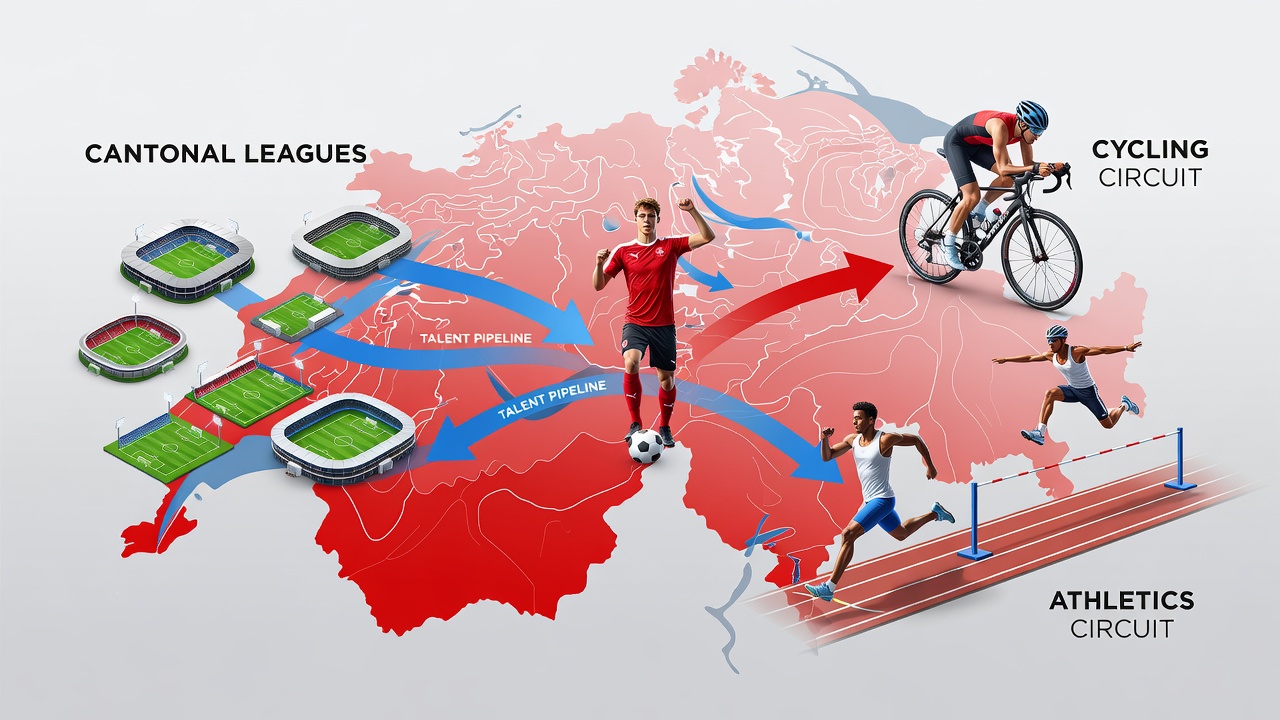
Switzerland organizes its football competitions through a network of 26 cantonal associations that feed players into national structures while maintaining strong regional identities, and these same frameworks support multi-sport development pathways that connect emerging football prospects to cycling and athletics circuits. Cantonal leagues operate at multiple tiers below the Swiss Super League, with each canton running its own amateur and youth divisions that emphasize local competition and player identification. Data from the Swiss Football Association shows that over 180,000 registered players participate across these cantonal levels each season, creating a broad base from which talent scouts identify prospects for higher pathways.
Cantonal League Organization and Regional Talent Identification
Each canton maintains its own league pyramid that begins with grassroots clubs and progresses through several divisions, while the structure allows for promotion and relegation that mirrors the national system yet remains grounded in local geography and resources. Observers note that cantons such as Zurich, Bern, and Vaud host particularly dense league networks because of population size and infrastructure, whereas smaller cantons like Appenzell rely on inter-cantonal arrangements to ensure competitive matches. Talent identification occurs through regular scouting at these matches, with regional coaches tracking players who demonstrate both technical skill and physical endurance that could translate across sports.
Coaches in cantonal programs often coordinate with athletics clubs to monitor running mechanics and speed development, while cycling federations receive referrals when young footballers show strong aerobic capacity during endurance tests conducted at league events. This cross-referral system operates without formal mandates yet produces measurable movement between disciplines, especially among athletes aged 14 to 18 who have not yet committed to a single sport.
Multi-Sport Pipelines Connecting Football, Cycling, and Athletics
Youth academies attached to cantonal clubs frequently schedule joint training sessions with regional cycling and athletics groups during off-season periods, allowing football prospects to build leg strength and cardiovascular fitness through structured cycling routes and track intervals. According to figures released by the Swiss Federal Office of Sport, participation in combined football-athletics programs increased by 12 percent between 2023 and 2025, reflecting deliberate efforts to keep athletes engaged across multiple seasons. These programs use standardized testing protocols that measure sprint times, lactate thresholds, and recovery rates, data that cycling teams then apply when recruiting riders for junior road and track events.
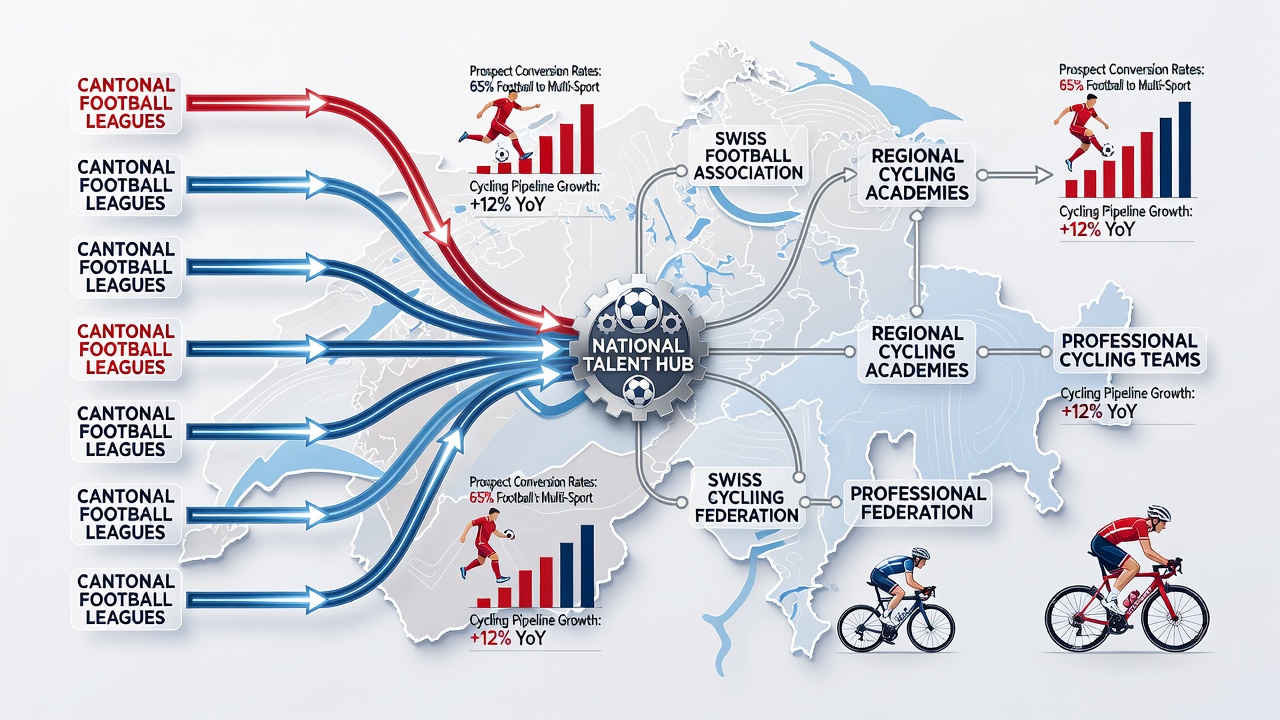
One documented pathway involves players from the Ticino cantonal leagues who transition into cycling squads based in the southern Alps, where the mountainous terrain provides natural conditioning that complements football match demands. Similarly, prospects identified in Geneva's athletics meetings often return to football in autumn while retaining summer track schedules that maintain speed and power. Researchers at the University of Lausanne have tracked these patterns and found that athletes who maintain dual registration through cantonal systems show lower injury rates during peak football periods compared with single-sport peers.
October 2026 Developments in Cross-Discipline Scouting
By October 2026, several cantonal associations began piloting a shared digital platform that links match footage from football leagues directly to performance databases used by Swiss Cycling and Swiss Athletics, enabling faster identification of prospects whose physical profiles match circuit requirements. The system flags players who record high work rates in league matches and routes their profiles to endurance coaches for further assessment. Early reports indicate that 47 athletes moved from football cantonal squads into cycling or athletics development groups during the first quarter of the 2026-2027 season using this tool.
These linkages rely on existing cantonal infrastructure rather than new national mandates, allowing each region to adapt the model to local club capacities and terrain advantages. For instance, Graubünden leverages its extensive trail networks for winter conditioning that feeds both football and cycling circuits, while Basel-Stadt focuses on indoor athletics facilities that support year-round speed work for multi-sport athletes.
Conclusion
Switzerland's cantonal league structures continue to serve as entry points that feed talent into national football systems while simultaneously supporting movement into cycling and athletics circuits through coordinated scouting, shared training, adn data exchange. The patterns observed through 2026 demonstrate how regional organizations sustain multi-sport development without requiring centralized overhaul, allowing prospects to explore endurance disciplines alongside football careers. As platforms and testing protocols expand, the connections between these circuits are expected to grow more systematic while remaining rooted in the cantonal framework that defines Swiss sport.