Cantonal Holiday Calendars Intersecting with Swiss Football League Schedules and Documented Effects on Recovery Timelines
Olivia Hayes · Sep 22, 2026
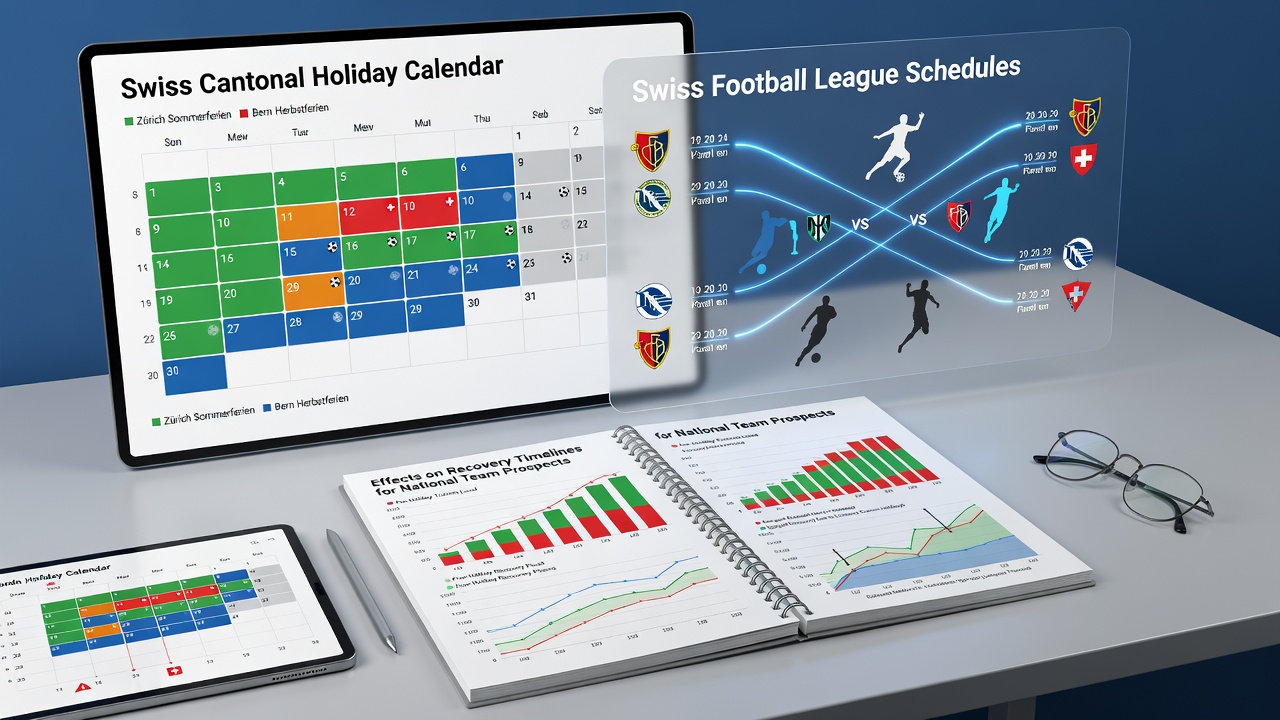
Cantonal Holiday Calendars Intersecting with Swiss Football League Schedules and Documented Effects on Recovery Timelines
Switzerland operates under a federal system where each of the 26 cantons maintains independent public holiday calendars, and these variations create distinct patterns when aligned against the Swiss Super League and Challenge League fixtures. Data from the Swiss Football League shows that cantons such as Zurich and Geneva observe different sets of religious and regional holidays compared with Valais or Graubünden, leading to staggered periods of reduced training availability for academy players and professional prospects. League schedulers account for these differences when setting midweek matches, yet the resulting fixture congestion in certain regions produces measurable shifts in player workload and rest intervals. Observers note that September 2026 will feature several Super League rounds that coincide with the Assumption Day holiday in eight cantons, while other regions remain on standard schedules. This creates a split calendar where teams based in holiday-observing cantons gain an extra rest day before or after specific fixtures, whereas squads in non-observing areas maintain full training loads. Recovery timelines tracked by club medical staff indicate that prospects aged 17 to 21 require between 48 and 72 additional hours to return to baseline physiological markers after matches that fall immediately before or after these staggered holidays.League Scheduling Mechanics and Regional Variations
The Swiss Super League publishes its annual calendar in collaboration with the Swiss Football Association, incorporating input from cantonal authorities to minimize major conflicts. Yet complete avoidance proves impossible because holidays such as Swiss National Day on 1 August and Christmas fall uniformly, whereas Easter Monday, Corpus Christi, and local saints' days differ by canton. Match data covering the 2023 through 2025 seasons reveal that teams in central Switzerland experienced an average of 2.3 more rest days per season than clubs in western cantons during holiday-adjacent weeks.
Academy prospects training at clubs like FC Basel or BSC Young Boys often follow the holiday calendar of their home canton even when the club itself operates across multiple regions. Medical monitoring conducted by the Swiss Olympic Association documents elevated cortisol levels and reduced sleep efficiency among players whose training resumes immediately after a cantonal holiday while teammates from other regions continue resting. These physiological markers correlate with longer recovery windows before players return to full-intensity sessions.
Documented Impacts on National Team Prospects
Prospects tracked through the Swiss national youth teams show distinct recovery patterns tied to their cantonal origins. Players from Ticino, where additional holidays occur around Epiphany and local patron saints, demonstrate shorter average recovery periods after international windows because their club schedules already incorporate similar breaks. In contrast, prospects from cantons with fewer interruptions accumulate higher cumulative fatigue when league fixtures resume without corresponding rest.
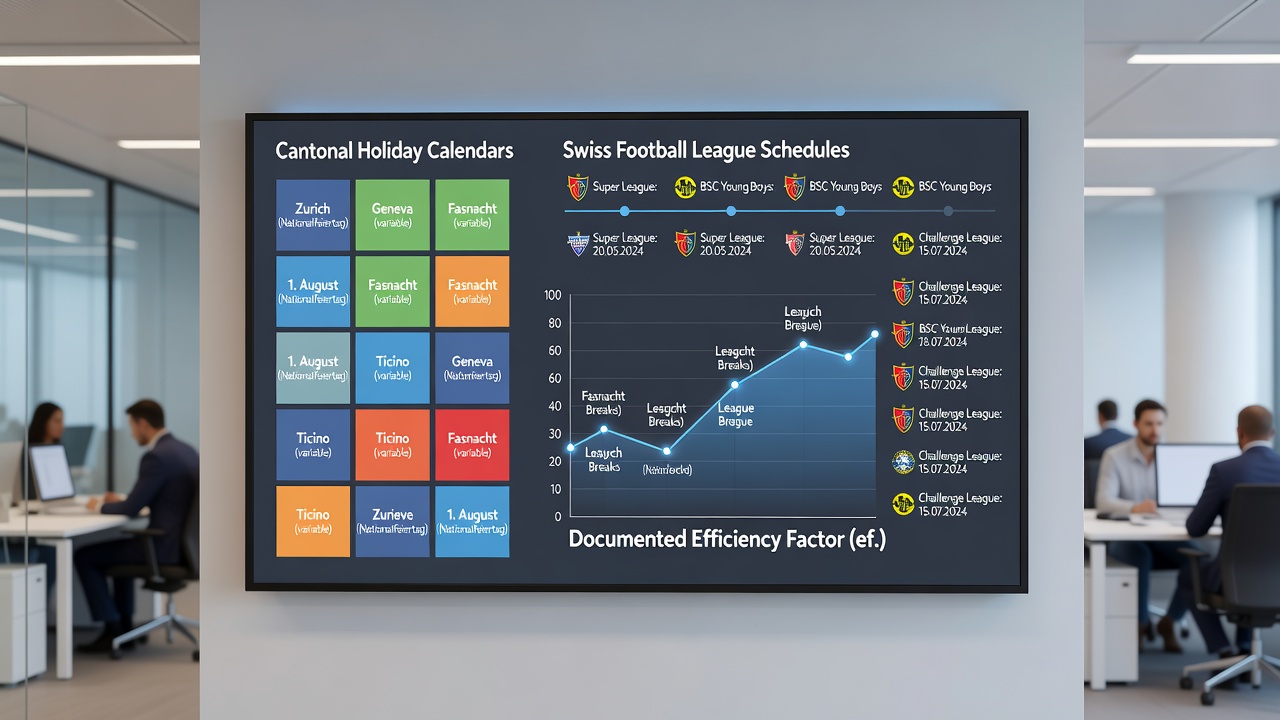
Studies published by the University of Lausanne Faculty of Biology and Medicine examined heart-rate variability and neuromuscular readiness in 142 academy players across three seasons. The research indicates that prospects whose clubs aligned training breaks with cantonal holidays returned to match fitness 1.8 days faster on average than those whose schedules did not. The same dataset links these accelerated timelines to reduced injury incidence during subsequent national team call-ups.
Coaches at the Swiss Football Association integrate cantonal calendar data into long-term planning for U19 and U21 squads. When preparing for September 2026 qualifiers, staff review holiday overlaps in each prospect's home canton to adjust individual recovery protocols before and after club matches. This approach draws on figures released by the Federal Office of Sport, which record annual variations in training availability across cantons.
Club-Level Adaptations and Monitoring
Professional clubs have introduced region-specific recovery modules that account for holiday-induced schedule shifts. Teams in holiday-dense cantons often schedule lighter sessions or travel earlier to maintain consistency, while clubs in regions with fewer holidays rely more heavily on load-management software. GPS and wellness data collected by clubs such as Servette FC and FC Lugano show that prospects benefit from individualized plans when cantonal holidays create unexpected rest windows or force compensatory training blocks.
These adaptations extend to nutrition and sleep interventions. Nutritionists adjust caloric intake and macronutrient timing for players whose rest periods expand or contract due to holiday alignments, and sleep coaches monitor actigraphy readings during transitional weeks. The cumulative effect appears in national team selection metrics, where players with optimized recovery access demonstrate higher availability rates during international periods.
Conclusion
Cantonal holiday calendars continue to shape Swiss football league scheduling and produce measurable differences in recovery timelines for national team prospects. League officials, club medical teams, and national youth staff incorporate these regional variations into planning frameworks, supported by physiological data and fixture analysis. As the 2026 season approaches, the intersection of these calendars will again influence training availability and player readiness across Switzerland's development pathway.